
 By Anna Jessica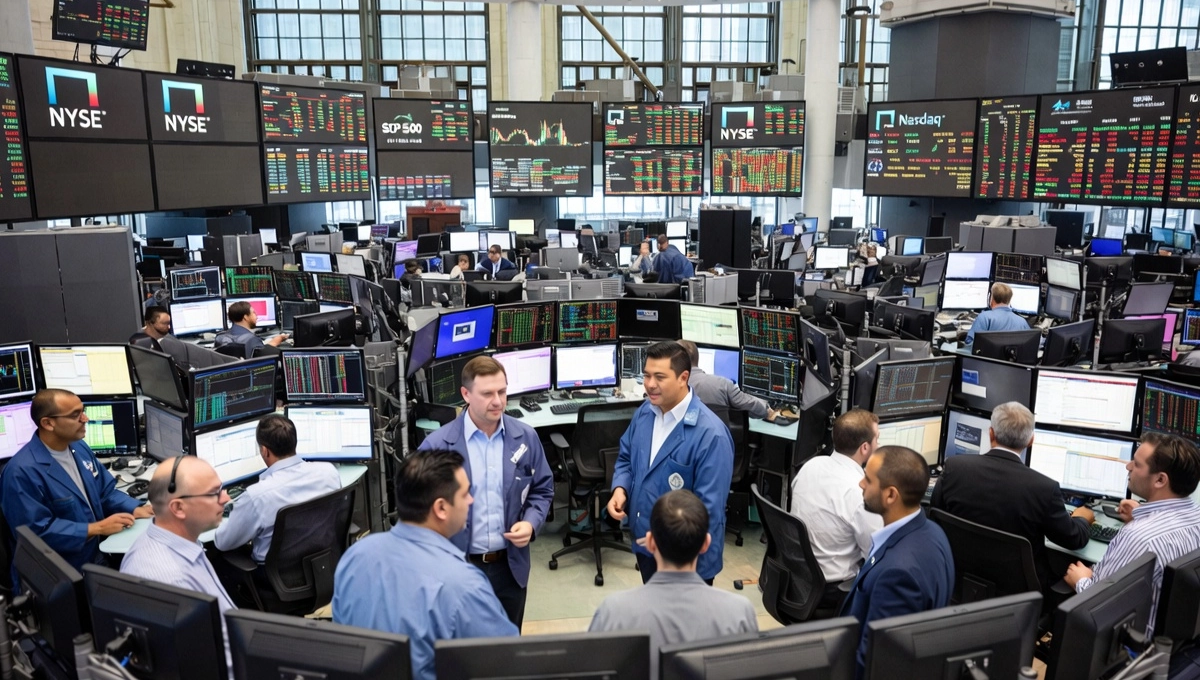
Ever catch yourself scrolling news and seeing “Dow up 300 points” or “Nasdaq tanks” and thinking… what even is happening? The stock market feels mysterious at first, but honestly, it’s just regular people (and big funds) buying and selling little pieces of companies. If you’ve ever felt intimidated by the charts or worried you’ll lose everything on day one, you’re in good company. Let’s walk through it together—no jargon overload, promise.
Key Takeaways
- Companies sell shares to raise cash, and you can buy those shares hoping the company grows, so over the long run, the S&P 500 has averaged roughly 10% a year.
- The two big playgrounds are NYSE (old-school giants worth trillions) and Nasdaq (where most tech names live).
- Prices go up and down a lot, but spreading your money across ETFs usually keeps you from getting wrecked, as we saw after the 2022 scare.
- You don’t have to stick to America—India and other fast-growing places can add extra juice to your portfolio.
- These days, you can literally start with a phone app and a robo-advisor that does most of the thinking for you.
What Is the Stock Market?
Imagine you and your friends decide to open a little coffee shop. To get the money for machines and rent, you sell “pieces” of the business to people who believe in the idea. Whoever buys those pieces owns a tiny part of the shop. If the shop does great, those pieces become more valuable.
That’s basically the stock market in one sentence. Companies sell shares so they can grow, and regular people like us get to own a slice. Right now, about 58% of American adults own at least a little stock (Gallup checked in 2025). When I bought my first tiny bit of Apple years ago, it felt weird—like I suddenly had a stake in every iPhone sold. If they launch something huge, my small piece might be worth more tomorrow.
It’s not only about making money, though. All those buys and sells help figure out what companies are really worth and keep money flowing where it’s needed.
How It Works
Here’s the simple version. A company that needs cash can “go public” with an IPO—that’s like the grand opening. After that, the shares trade back and forth between people on what we call the secondary market. That’s where almost everything happens.
Price moves because more people want to buy than sell (price goes up) or the opposite (price drops). There are two main flavors: common stock (you get a vote at meetings) and preferred stock (you usually get paid dividends first, like getting your cut before anyone else).
Quick beginner hack—use one of the big apps that charges zero to buy or sell. It removes that annoying “I’m losing money just to trade” feeling right away. And that bid-ask thing you sometimes hear? It’s literally just the difference between the highest price someone will pay and the lowest price someone will accept—like two people haggling over a used bike.
Key Exchanges and Indexes
The exchanges are the actual marketplaces. NYSE is the heavyweight champ—over 2,300 companies, total value hovering around $28 trillion. Think classic names like Coke or Walmart. Nasdaq feels more modern and techy—Apple, Microsoft, Nvidia, that crowd.
Indexes are just easy ways to see how “the market” is doing overall. S&P 500 tracks the biggest 500 U.S. companies and weights them by size (so bigger companies move the needle more). Dow Jones only follows 30 really established ones and weights them by share price instead. In 2024, the S&P jumped about 25%, mostly because AI hype was everywhere.
If you’re new, pay a tiny bit of attention to that bid-ask spread on less popular stocks—it can be wider and quietly eat into your returns.
Starting to Invest
Want in? Step one is opening a brokerage account. Tons of them let you start with $0 or maybe $1,000. Download the app, connect your bank, and done.
If picking individual stocks feels overwhelming (it does for almost everyone at first), grab an ETF instead. It’s basically a ready-made basket of lots of stocks, so you’re not betting the farm on one company. ETFs usually cost way less than actively managed mutual funds, too.
Personal favorite lazy-but-smart move: robo-advisors. You answer a short quiz about your age, goals, risk comfort, and it builds and rebalances everything automatically. Perfect if market drops make your stomach flip.
Risks and Volatility
Let’s be real—it’s not always sunshine. Sometimes the whole thing drops hard. In 2022 the S&P 500 fell over 20% and everyone panicked. Then it climbed back more than 50% by early 2026. That’s the pattern: scary dips, then recovery if you can hang on.
People on Reddit and Twitter constantly post about feeling “played” or missing the perfect time to buy. Truth is nobody nails the timing consistently. Best defense? Spread your money around (diversify) and don’t check your account ten times a day during a storm.
Picture this: your portfolio is down 15% in a week. Heart races. Instead of selling, remind yourself markets have always come back eventually—and history is on your side if you stay calm.
Current Trends
AI is the loudest story right now. Anything with chips, software, or data centers has been flying on Nasdaq. A lot of people are also leaning into ESG—companies that try to do right by the planet and their workers. Feels good when your money isn’t just chasing profit.
Even crypto snuck its way in with Bitcoin ETFs so you can get exposure without directly buying coins. And remember Chipotle’s big 2024 split? One share that cost thousands became fifty shares anyone could afford. Same company value, way more people could play.
Global Perspectives
America gets all the headlines, but the whole world market was worth roughly $110 trillion by the end of 2023. India’s growing super fast right now—lots of young people, tech boom, consumer explosion. Putting a little there can balance things if U.S. news turns sour (tariffs, inflation, whatever).
You can do it easily with international ETFs—no need to open accounts overseas or figure out currency headaches. It’s like adding different spices to the same dish—same base, but more flavor and less risk if one ingredient goes bad.
Advanced Strategies
Once you’re comfortable, you can look at dividends—those are like little thank-you checks some companies send shareholders every quarter. Nice passive income vibe.
Stock splits (like Chipotle did) don’t change your ownership percentage, but make shares cheaper so more people jump in. Taxes? If you hold longer than a year, the government usually takes a smaller bite on profits—worth remembering.
Day trading looks exciting on YouTube… until you see the stat that over 90% lose money doing it. Most people do way better just buying solid index funds and leaving them alone for years.
When things get choppy, a stop-loss order can automatically sell if it drops too far—kind of a safety net for your emotions.
Conclusion
The stock market isn’t a secret club or a casino—it’s simply a place where everyday people can own small pieces of real businesses and grow wealth over time. While prices rise and fall in the short term, history shows that patient, diversified investors are usually rewarded for staying the course.
You don’t need perfect timing, expert predictions, or huge amounts of money to begin. Starting with broad ETFs, keeping emotions in check, and thinking long-term can turn market ups and downs into opportunities rather than stress. Learn steadily, invest consistently, and let time do the heavy lifting—the stock market works best when you give it room to grow.
FAQs
What is the stock market in simple terms?
The stock market is a place where people buy and sell shares of companies. When you buy a share, you own a small part of that company and can benefit if it grows or pays dividends.
How does the stock market work for beginners?
Companies raise money by selling shares to the public, and investors trade those shares on stock exchanges like the NYSE and the Nasdaq. Prices move based on demand, company performance, and overall economic news.
Is the stock market safe for beginners?
The stock market has natural ups and downs, but beginners can lower risk by investing in diversified ETFs, avoiding emotional decisions, and focusing on long-term growth instead of short-term swings.
How much money do I need to start investing in stocks?
Many modern brokerages allow beginners to start with very little money—sometimes as low as $0. Fractional shares and ETFs make it possible to invest even with a small budget.
What is the difference between NYSE and Nasdaq?
NYSE lists many established, traditional companies, while Nasdaq is known for technology and growth-focused stocks. Both exchanges play a major role in global investing.